

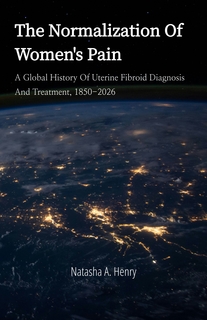
The Normalization of Women's Pain: A Global History of Uterine Fibroid Diagnosis and Treatment, 1850-2026
By Natasha Adrienne Henry
A two-chapter digital excerpt examining the evolution of surgical technology in fibroid care and the emerging frontier of genomic and computational medicine, drawn from a forthcoming global history of uterine fibroid diagnosis and treatment spanning 175 years and five continents.
About
This digital project presents two chapters from The Normalization of Women's Pain: A Global History of Uterine Fibroid Diagnosis and Treatment, 1850–2025, a forthcoming scholarly monograph tracing the clinical, institutional, and technological history of fibroid care across Low and Middle-Income Countries and High-Income Countries from the mid-19th century through the present.
The two chapters collected here examine medical technology as both a driver of clinical progress and a lens for understanding why that progress has not reached all patients equally. Chapter 8 traces the evolution of surgical instruments and imaging technologies in gynecological care from the rudimentary implements of the 19th century through the robotic-assisted and interventional systems of the present, analyzing the mechanisms by which innovations developed in high-income settings have diffused, or failed to diffuse, across global health systems. Chapter 14 examines the emerging frontier: personalized genomic medicine, targeted pharmacological therapies, AI-assisted diagnostic systems, and computational clinical decision support frameworks that may reshape fibroid care in the coming decade, evaluated against the equity frameworks the preceding historical argument establishes. Together, the two chapters trace a continuous question across 175 years of medical history: what determines who benefits from advances in the treatment of one of the most prevalent gynecological conditions in the world?
The complete manuscript is forthcoming. Inquiries may be directed to natashahenry@nyu.edu.
Reading Materials
- This text has 0 annotations
- This text has 0 highlights