Jasper Herbert Kane
By Kenneth Sun
Introduction
The focus of this investigation is on one of the Giants of Poly, Jasper Kane. I chose to present Jasper Kane to highlight his monumental historical contributions to the field of medicine. Jasper Kane’s journey reflects the broader impact of Polytechnic University alumni on society through scientific innovation. This investigation seeks to answer the question: How did Jasper Kane’s development and implementation of deep-tank fermentation transform penicillin from a laboratory discovery into a mass-produced medicine and, in the process, transform the pharmaceutical industry? More importantly, this investigation seeks to demonstrate that industrial engineering innovations, not just scientific discovery, were the decisive factors in transforming penicillin into a global medicine. This investigation argues that the decisive turning point in penicillin’s history was not its initial discovery but the development of industrial-scale production methods, demonstrating that engineering innovation played a more critical role than laboratory science in transforming penicillin into a globally accessible medicine.
Jasper H. Kane (“Pfizer’s Penicillin Pioneers – Jasper Kane and John McKeen.”, 2010)
Made in Brooklyn
Who Was Jasper Kane?
Jasper Herbert Kane (July 15, 1903 – November 19, 2004) was an American industrial chemist who played a major role in the development of deep-tank fermentation for the mass production of penicillin during World War II. According to Giants of Poly: Jasper H. Kane: A Legacy of Dazzling Discoveries, when asked what his proudest accomplishment was, Kane answered with no hesitation, “penicillin,” revealing how strongly he identified with the wartime transformation of pharmaceutical production.

Jasper H. Kane (Giants of Poly)
The booklet “Giants of Poly: Jasper H. Kane: A Legacy of Dazzling Discoveries” is a selection from the Poly Archives. It is a chronological account of Jasper Kane’s life, career milestones at Pfizer, and significant contributions to medical science and society. As an institutional publication from the Poly Archives, it also reflects how Kane’s work has been interpreted and remembered at the Polytechnic Institute of Brooklyn.
According to Giants of Poly: Jasper H. Kane: A Legacy of Dazzling Discoveries, Jasper Herbert Kane was born on July 15, 1903. His father, Jasper Thomas Kane, a second-generation Irish-American, married Loretta Sulpice O’Reilly, a first-generation Irish-American. The couple’s first child, Jasper, “was born in Brooklyn–as were all the rest: a girl, who died just a week after birth, then five more boys–Charles, Harold, Arthur, Robert, and Edward–then twins Evelyn and Herbert.” Jasper Kane, a Brooklynite, “obtained his primary and secondary education at Our Lady of Good Counsel parochial school and Manual Training High School” (“Pharmacy Unit Is 25 Years Old”). “Jasper and four of his brothers would attend Polytechnic Institute of Brooklyn (now Polytechnic University)” (“Jasper H. Kane: A Legacy of Dazzling Discoveries”). Jasper and Harold studied chemistry, while Charles, Arthur and Robert pursued their father’s field of structural engineering.
As one of the favorite sons of the Polytechnic Institute of Brooklyn, Jasper Kane, a chemistry major, attended evening classes there from 1918 to 1928, graduating in 1928. Kane also received an honorary Doctorate of Science degree from Polytechnic University in 1995 (Rodengen, 2005). He also received the honorary degree of Doctor of Science from the College of Pharmacy at St. John’s University, recognizing his contributions to medicine, particularly in discovering and developing the broad-spectrum antibiotics (“Pharmacy Unit Is 25 Years Old”).
While attending the Polytechnic Institute of Brooklyn and working for Pfizer, Kane recruited friends to work at Pfizer, including John McKeen from the Class of 1926. McKeen stayed at Pfizer and eventually became the company’s president in 1949. “Indeed, if influence on a single company and industry is any gauge, Kane and McKeen could very well be Polytechnic’s most important alumni tag-team” (“Jasper H. Kane: A Legacy of Dazzling Discoveries”).
During a commencement speech in May 2004, Henry A. McKinnell Jr., chairman of the board and chief executive officer of Pfizer Inc., said, “The genius of Jasper Kane and John McKeen soon made Pfizer the world’s largest producer of penicillin. Did that achievement turn the tide of the Second World War? No… brave men and women did that. But cheap and readily available penicillin did save hundreds of thousands of lives during the war… and tens of millions of lives after it” (McKinnell, 2004).
A Giant Made in Brooklyn
Kane joined his lifelong employer, Pfizer, while still in high school. Pfizer, a chemical company, was founded in a red brick building in Brooklyn in 1849 by cousins Charles Pfizer and Charles Erhart. The company moved its headquarters to the Financial District in Lower Manhattan in 1868, although it continued to maintain its manufacturing facility in Brooklyn (Pfizer). Since then, Pfizer has evolved from a chemical manufacturer into a global pharmaceutical and biotechnology company through innovations and acquisitions. Today, it has a market capitalization of approximately $153 billion and generates about $60 billion in annual revenue (“Pfizer Inc. (PFE) Valuation Measures & Financial Statistics”).
On the Pfizer History website, Pfizer outlines its history, products, founders, and CEOs. One of the notable names is its exceptional employee, Jasper Kane, listed among the founders and CEOs. The following timeline of Jasper Kane’s career is reflected in the images of Pfizer’s milestone products, highlighting his critical role in each major product developed during his time at the company. These images not only represent his major industrial and pharmaceutical achievements but also illustrate the progression of his deep-tank fermentation innovation.
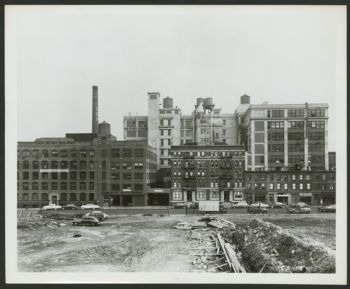 Polytechnic Institute ("333 Jay Street, Before Polytechnic: 1950-1957")
 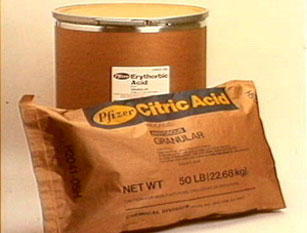 Citric Acid (Pfizer Today)
  Vitamin B2 (Pfizer Today)
  Penicillin (Pfizer Today)
  Terramycin (Pfizer Today)
 As a teenager, Jasper Kane worked on SUCIAC (Sugar Under Conversion Into Acid Citric), a project that revolutionized the citric acid industry. Later, he made his first company-transforming discoveries by developing a method to substitute molasses, a cheap by-product of sugar refining, for more expensive white sugar in citric acid production. He employed submerged fermentation methods, using large, deep tanks rather than shallow trays, allowing microorganisms to grow throughout the liquid medium rather than only on the surface. This approach saved millions of dollars in raw material and production costs and freed Pfizer from dependence on European citrus growers (Pfizer; “Jasper H. Kane: A Legacy of Dazzling Discoveries”). Building on his success in citric acid production, Kane applied fermentation methods to produce riboflavin (vitamin B2) for use in flour (Pfizer). The new process for producing vitamins demonstrated the growing significance of industrial fermentation and contributed to 40% of Pfizer’s earnings (“Jasper H. Kane: A Legacy of Dazzling Discoveries”; Roueché, 1951).
Kane’s submerged deep-tank fermentation methods enabled the mass production of penicillin during World War II and transformed penicillin from a laboratory discovery into a widely available, life-saving drug. Microbiologist Gladys L. Hobby compared the mass production of the penicillin program to the Manhattan Project to emphasize the profound effect of penicillin on our modern society in saving tens of millions of lives (Conniff, 2017). This comparison demonstrates the significant impact of deep-tank fermentation methods on World War II and society.
Kane's contributions to medicine were broad-based, beyond penicillin. For example, after the war, as Director of Biochemical Research at Pfizer Inc., Kane led the team that discovered and produced Terramycin, a broad-spectrum antibiotic effective against over 100 infectious organisms (“Zoetis History”, 2015).
The above historical pictures from Pfizer Inc. demonstrate the progression in which the same fermentation principles underpinned both industrial chemicals and life-saving medicines, reinforcing the claim that the breakthrough in penicillin was rooted in engineering continuity rather than a single moment of scientific discovery. They also support the argument that large-scale industrial coordination and engineering innovation were as critical to World War II as scientific discovery itself.
Penicillium Notatum
Discovery of Penicillin
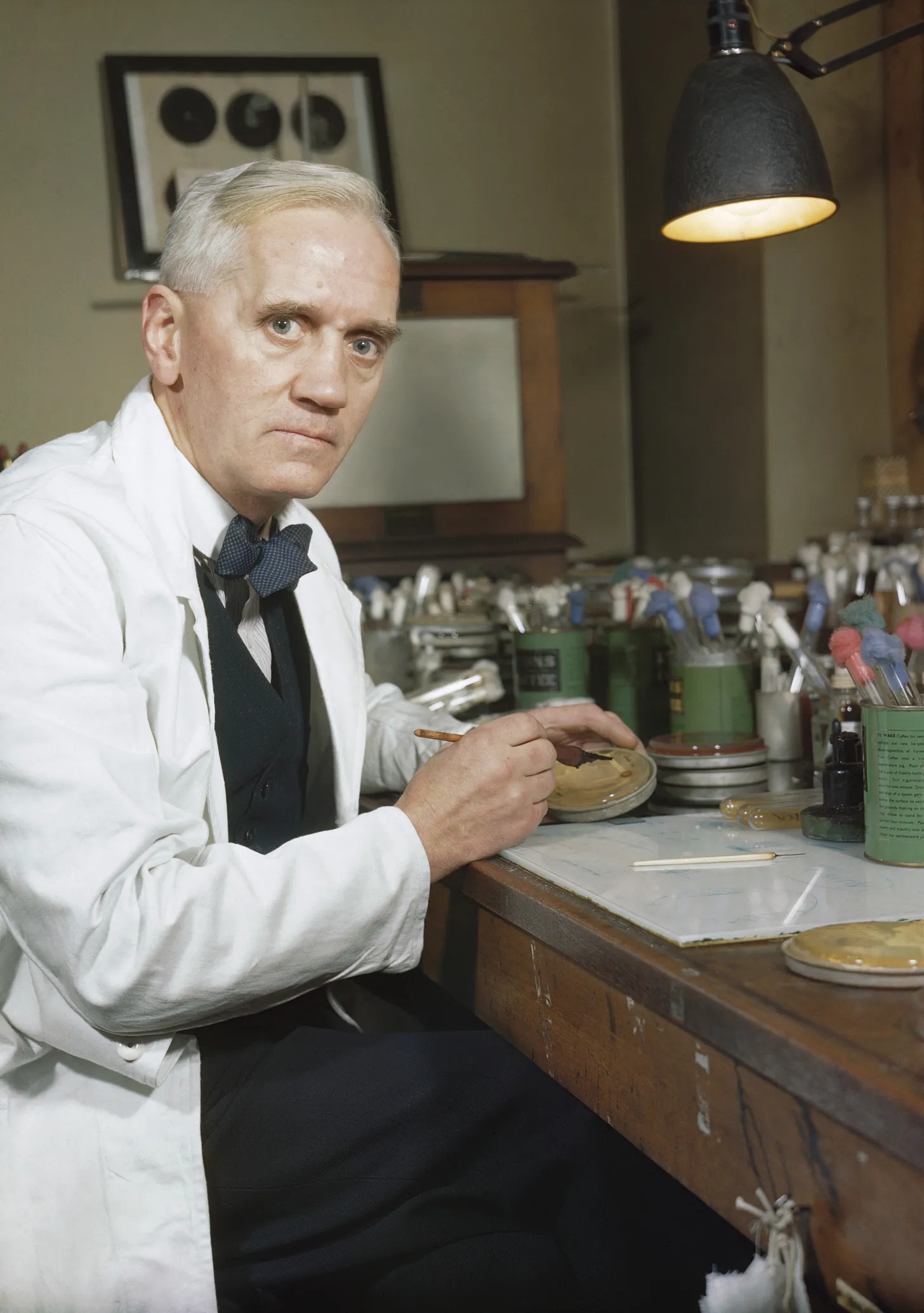
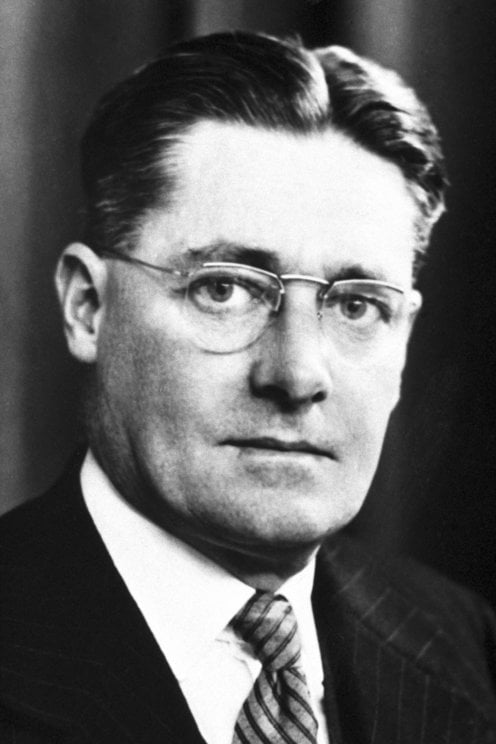
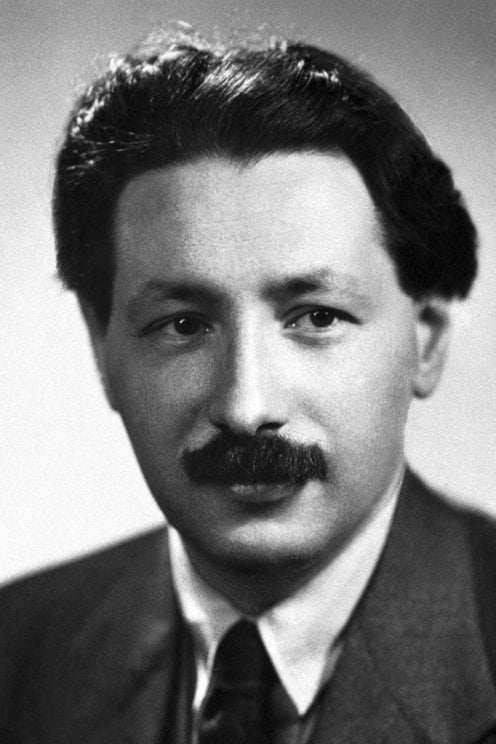
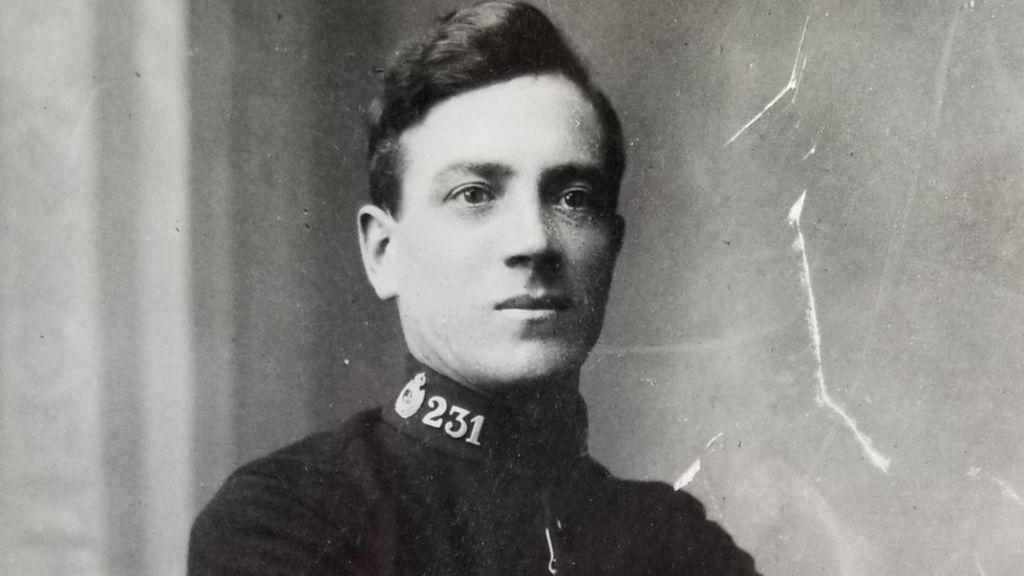 Albert Alexander (Zaccaro, 2023)
 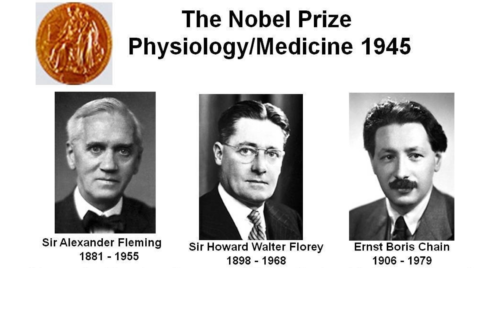 Nobel Prize Winners (Bruggink, 2021)
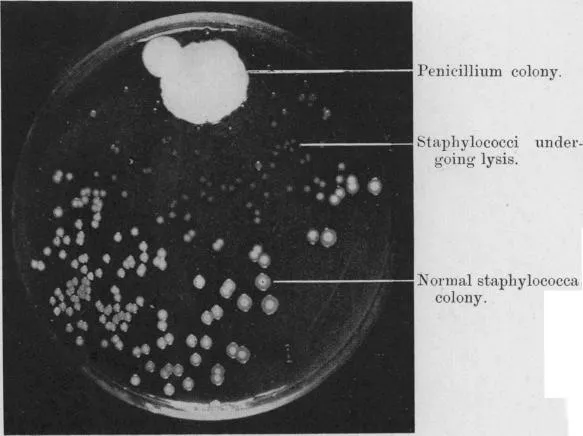
 Penicillin was discovered in September 1928 by Sir Alexander Fleming, a Scottish/British scientist who was a professor of bacteriology at St. Mary’s Hospital in London. On September 3, 1928, Fleming began sorting his Petri dishes containing Staphylococcus bacteria after returning from his approximately three-week-long vacation. He noticed that in one of his Petri dishes, dotted with Staphylococcus colonies, the bacteria had died around an area where mold was growing (“Discovery and Development of Penicillin”). The environment that produced the effect that Alexander Fleming saw was extremely difficult to reproduce because molds and bacteria each require different temperatures to grow. According to the NOVA documentary, The Rise of a Wonder Drug: How Penicillin Changed the World, Fleming usually grew bacteria on plates and put the plates in an incubator to allow the bacteria to form colonies. While he was away on vacation, some of his Petri dishes were left outside, allowing the English summer weather to create the conditions necessary for the discovery. The documentary explains, “First, an unusual cold spell allowed the mold to flourish. Then, the temperature rose and the bacteria started growing. Beneath the lid of an abandoned laboratory plate, the mold started killing off the young bacteria.” The discovery of penicillin is an example of how chance plays an important role in scientific discovery. Staphylococci, a human pathogen, grow most rapidly at the human body temperature of 98.6 °F. The lowest temperature at which they can grow is around 53 °F. The Penicillium mold prefers to grow around 77 °F (Blake, 2025).
Fleming’s Original Culture Plate in 1929 (Blake, 2025)
Fleming found that penicillin could kill a wide range of bacteria. He later identified it as Penicillium notatum, a rare strain of mold that produces penicillin, a substance that inhibits bacterial growth. He attempted to isolate pure penicillin from mold culture, which proved to be difficult. He published his paper in the British Journal of Experimental Pathology in June 1929. The discovery was largely forgotten at the time (“Discovery and Development of Penicillin”).
It was not until 1939 that Alexander Fleming’s discovery was transformed from a laboratory curiosity into a life-saving drug when three Oxford researchers (Howard Florey, Ernst Boris Chain, and Norman Heatley) chose, somewhat by chance, to investigate it further among many possible research topics. These scientists began their work on the purification of penicillin during World War II, which made research conditions especially difficult. The team first carried out animal experiments in which they needed to process up to 500 liters of mold filtrate per week. They used many different culture vessels such as bedpans, baths, milk bottles, and food tins. The team later developed a customized fermentation vessel based on bedpans to save space and simplify the process of removing the broth. From the filtrate, penicillin was extracted, purified, and concentrated prior to clinical trials. The scientists discovered that the key to extracting penicillin was controlling the pH, reducing the temperature, and repeatedly evaporating the product. The Oxford laboratory was effectively turned into a penicillin factory during that time (“Discovery and Development of Penicillin”).
In 1941, purified penicillin remained extremely scarce due to a combination of biological, chemical, and engineering challenges. “The Penicillium mold only grew in a film, a few millimeters thick, on the surface of a growth medium, and Oxford biochemist Norman Heatley constantly struggled to eke out enough of the stuff even for experimental purposes. His manufacturing lab comprised cookie tins, pie tins, milk bottles, trays, plates, and bedpans” (Conniff, 2017). The original strains of Penicillium mold produced only very low yields of antibiotics. In addition, penicillin is highly unstable and easily contaminated, and the molecule can degrade during extraction and purification from the broth. The production process was also time-consuming and labor-intensive, requiring careful control of environmental conditions, including sterile conditions, adequate aeration, careful temperature regulation, and the use of anti-foaming techniques to maintain optimal mold growth. Researchers at the University of Oxford could only produce penicillin in an array of small vessels, which severely restricted its availability. By early 1941, only enough penicillin for six patients had been produced by surface culture (Short, 2021).
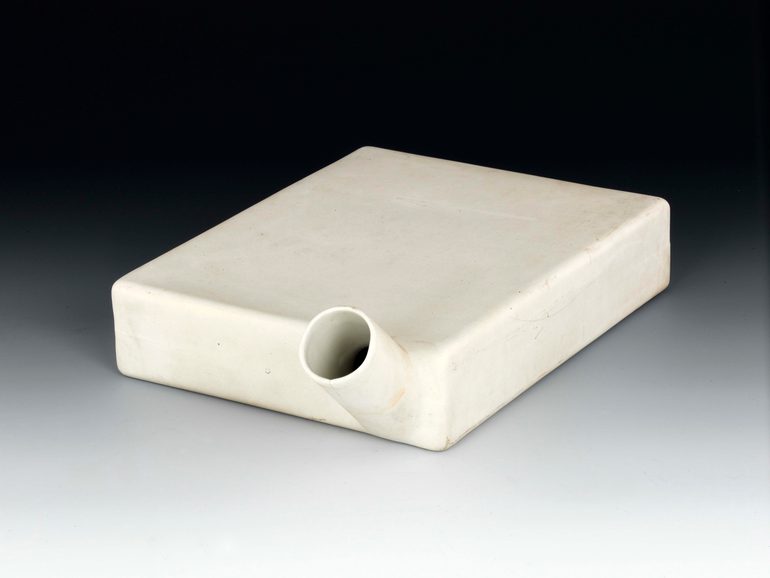
Culture vessel, 1940, designed by Dr Norman George Heatley (1911-2004).
Museum reference T.1989.101.
This vessel is an artifact in the National Museum of Scotland. It was designed by Norman Heatley based on bedpans. He used this type of vessel to grow penicillin. The significance of this artifact is that, before deep-tank fermentation, penicillin production was limited to small batches. This limitation, the inability to scale production beyond fragile and inefficient small-batch systems, highlights the central problem that Kane’s later work would address.
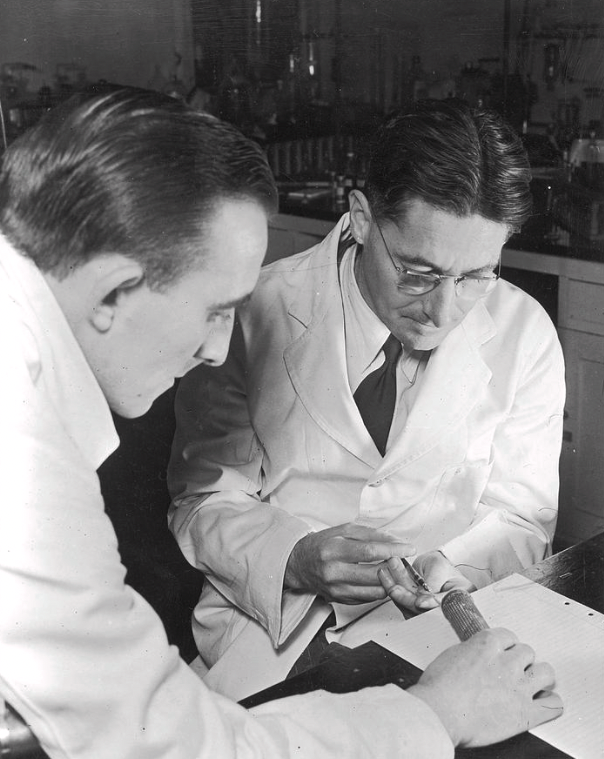
Injecting Penicillin into Mice in 1940 (Science History Institute, 2026)
Meanwhile, the effectiveness of penicillin was demonstrated by Oxford scientists through a controlled trial involving laboratory mice. The above photo depicts Oxford University scientists Howard Florey and Ernst Boris Chain injecting penicillin into laboratory mice. The efficacy of penicillin was tested on eight laboratory mice on May 25, 1940. Four of the mice were given penicillin treatment, and the other four mice were used as controls. Sixteen and a half hours later, the four mice that received penicillin treatment were alive, while the control mice had died (Wood, 2010).

Albert Alexander (Sullivan, 2022)
This is a picture of Albert Alexander, the first human patient to be given penicillin treatment on February 12, 1941. Albert Alexander, a 43-year-old policeman, was injured and developed a serious case of sepsis after a cut on his face became infected. His blood was poisoned by bacteria. His physician, Charles Fletcher, noticed that “Alexander was in tremendous pain… The bacterial infection was eating him alive. He’d already lost one eye and had oozing abscesses all over his face and in his lungs” (Sullivan, 2022). Fletcher decided to treat Alexander with penicillin after exhausting all alternative treatment options. Alexander was given an initial dose of approximately 160 milligrams of penicillin (“The Forgotten Mother of Penicillin”). His urine was collected to recover residual penicillin after his injection. The collected urine was then brought to a laboratory and reprocessed. The recycled and reprocessed penicillin from the collected urine was injected back into him on the third day. On the fourth day, Alexander began a stunning recovery. However, the penicillin supply began to run out after the fifth day because not all of the penicillin injected into him could be recovered from his urine. Alexander gradually relapsed and died on March 15, 1941 (Sullivan, 2022) (“NOVA: The Rise of a Wonder Drug (1986)”, 2025). Alexander’s death highlights the urgency to manufacture penicillin at scale. While scientific discovery initiated the process, it still had to wait for Kane's industrial innovation to transform penicillin from an experimental substance into a practical and widely available treatment.
The full video, The Mass Production of Penicillin for WW2, was produced by Medical History and published on YouTube. The video explores infections before penicillin, its discovery, and its mass production in World War II. The purpose of the video is to teach viewers about an interesting chapter of military history in which the wonder drug of penicillin saved hundreds of thousands of soldiers’ lives. The excerpt focuses on penicillin’s first human trial.
Penicillin Coming to America
Oxford scientists took penicillin to the United States to collaborate with American scientists and pharmaceutical companies for mass production. This was because, during wartime, England’s production capabilities were limited, which prevented large-scale manufacturing (“Discovery and Development of Penicillin”).
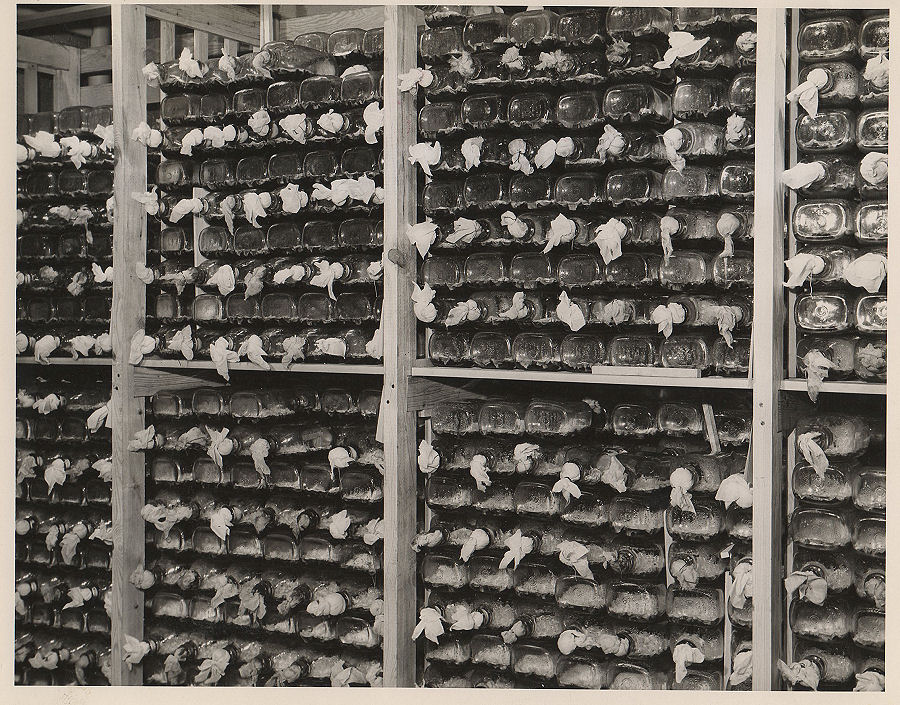
Milk Bottle Penicillin Production (“Penicillin Production in WW II”)
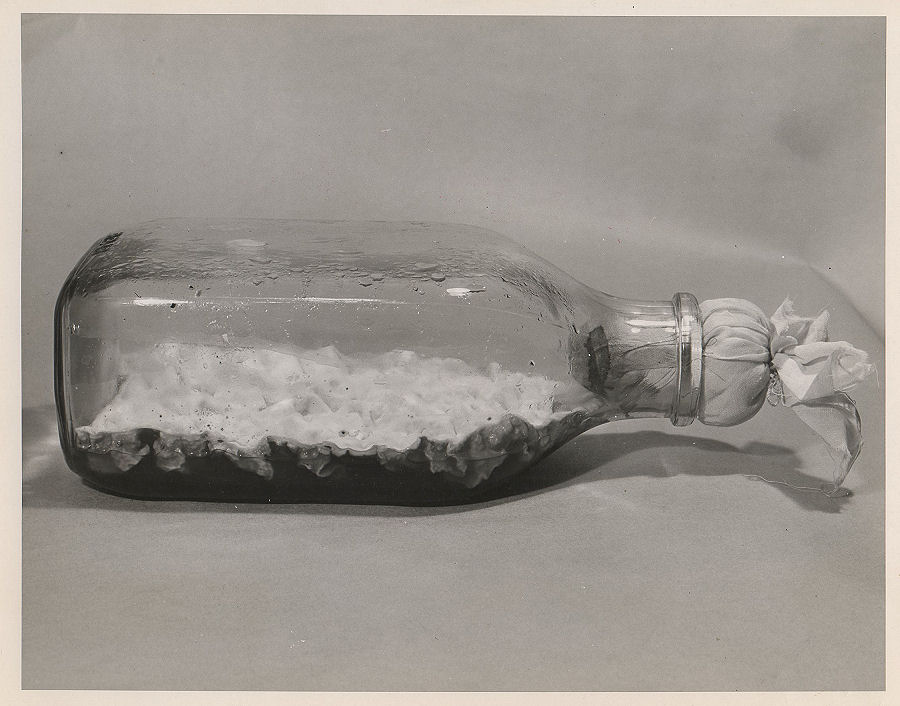
Milk Bottle Penicillin Production (“Penicillin Production in WW II”)
These two pictures illustrate the production of penicillin through surface fermentation. Penicillin could only be produced in small batches using this method, which made supplying penicillin to wounded soldiers and civilians during the war nearly impossible (Conniff, 2017). Penicillin eventually became a widely available medicine through the use of deep-tank fermentation methods pioneered by Jasper H. Kane (“Penicillin Production through Deep-Tank Fermentation”).
Mass Production of Penicillin
Kane’s Deep-Tank Fermentation Patents
The deep-tank fermentation process pioneered by Jasper Kane played an important role in the mass production of penicillin in World War II. Developed to increase yields for citric acid and vitamin production, deep-tank fermentation methods became an ideal and practical method to mass-produce penicillin.
Despite his major contributions to the mass production of penicillin, none of Jasper Kane’s patents directly involved penicillin production. However, he filed many patents on the deep-tank fermentation process, a process that was crucial for penicillin production during World War II. Kane’s patents included ones on fermentation processes that helped develop deep-tank methods for citric acid and were later applied to penicillin production (Patent 2,327,191 - https://patents.google.com/patent/US2327191A, Patent 2,385,283 - https://patents.google.com/patent/US2385283A, and Patent 1,893,819 - https://patents.google.com/patent/US1893819A) and patents related to Terramycin and its applications (Patent 2,516,080 - https://patents.google.com/patent/US2516080A, Patent 2,963,401 - https://patents.google.com/patent/US2963401A, and Patent 2,813,820 - https://patents.google.com/patent/US2813820A).
These patents are often grouped together under deep-tank fermentation, but each of them solves a different problem and requires a distinct process or engineering refinement. In each case, Kane and his collaborators addressed new technical challenges, such as chemical control, oxygen utilization, mold selection, and product extraction. This series of patents demonstrates the evolution of fermentation through multiple innovations.
Jasper Kane’s Patent 2,327,191
https://patentimages.storage.googleapis.com/a4/7a/f6/26ab4769a3aa26/US2327191.pdf
(Kane, Finlay, and Amann, Production of Fumaric Acid. U.S. Patent 2,327,191, 1943.)
In U.S. Patent 2,327,191 – Production of Fumaric Acid, filed on December 7, 1939, inventors Jasper H. Kane, Alexander Finlay, and Philip F. Amann made 14 claims describing a new and commercially viable method for producing fumaric acid using mold fermentation. This patent represents significant innovation over earlier methods that rely on surface (shallow) fermentation, which produced very low yields. Patent 2,327,191 is one of the patents that Jasper Kane filed on his deep-tank fermentation methods. The patented method enables substantial production of fumaric acid with minimal byproducts, making recovery easier and cheaper. Overall, this patent’s key innovation is to demonstrate that controlled, aerated submerged fermentation can achieve high yields and enable mass production. The patent also demonstrates how Kane’s work helped shift fermentation from small-scale laboratory practices to scalable industrial production.
In Patent 2,327,191, the invention introduced a submerged aerobic fermentation process, in which molds, such as Rhizopus, Mucor, and Aspergillus, grow throughout a liquid medium rather than only on the surface. The process involves fermenting carbohydrate sources with nutrient salts while supplying oxygen. A neutralizer is added during fermentation to control acidity and increase yield.
Although Patent 2,327,191 does not directly mention penicillin, it describes a fermentation method that was later used in the mass production of penicillin. Jasper Kane filed many patents related to deep-tank fermentation, each addressing a different chemical or engineering challenge. The progression across these patents shows the accumulation of technical expertise over time, as each innovation addressed a different challenge in fermentation, from oxygen transfer and agitation to biological efficiency and product purification. These patents demonstrate that Jasper H. Kane was a leading expert in deep-tank fermentation and played a central role in transforming fermentation from laboratory techniques to industrial-scale processes. This argument reinforces the idea that the breakthrough in penicillin production was not a single discovery, but the cumulative result of incremental engineering advances that enabled reliable, large-scale fermentation.
Kane’s Critical Role in Penicillin Production During World War II
During World War II, the War Production Board coordinated a rapidly expanding network of chemical and pharmaceutical companies, including Pfizer, to increase penicillin production. Initially, Pfizer attempted to produce penicillin using small-scale surface fermentation in flasks and shallow pans, but this approach was quickly abandoned due to low yields and a lack of scalability. According to “Discovery and Development of Penicillin” and “Jasper H. Kane: A Legacy of Dazzling Discoveries”, Jasper Kane drew on his expertise in the deep-tank fermentation process, went to John L. Smith, head of the factory at Pfizer, and proposed that Pfizer employ deep-tank fermentation, using 2,000-gallon stainless-steel drums, a process that Kane had previously developed to produce citric acid and vitamins. Smith, however, expressed serious concerns about the risks involved. “The mold is as temperamental as an opera singer, the yields are low, the isolation is difficult, the extraction is murder, the purification invites disaster and the assay is unsatisfactory. Think of the risks and then think of the expensive investment in big tanks – think of what it means if you lose a 2,000-gallon tank as against what you lose if a flask goes bad. Is it worth it?” asked Smith. Dr. Kane replied, “It is – if it is the only way to get mass production.” Smith continued, “Think of this. Even the finished penicillin is unstable. We don’t know if we can make it in large amounts, or if we do, that we can store it and keep it sterile. And another thing: We can invest in an expensive tank method, and then someone else might develop an entirely new method of making it, or stumble on the formula for producing it synthetically. That would make our whole plant obsolete overnight.” Again, Kane replied, “It’s a risk we have to take. At this moment, it is the only way, even if it is a gamble”.
Giants of Poly: Jasper H. Kane: A Legacy of Dazzling Discoveries recounts that Smith then asked Pfizer’s plant managers to vote: “Are you willing to risk the money necessary to put up a penicillin plant with the little we know so far about this drug?” The managers voted overwhelmingly “yes.” The board agreed and decided to convert their lucrative riboflavin (Vitamin B2) operations into penicillin production. This moment represents a turning point in which industrial risk-taking and engineering expertise replaced laboratory experimentation as the primary driver of progress in penicillin production. This journey of penicillin shows that while scientific discovery initiated the process, it was industrial innovation that completed it, transforming penicillin from an experimental substance into a practical treatment available on a large scale.
The full video, The Drug That Couldn’t Save One Man in 1941 – Then Saved Millions in World War II, was produced by "Since 1939" and published on YouTube. The video traces the journey of penicillin from discovery to mass production. It summarizes the major development steps and key figures involved. The excerpt focuses on Jasper Kane’s contributions to the mass production of penicillin.
Penicillin Production
To ramp up penicillin production, Pfizer purchased the vacant Rubel Ice Plant on Marcy Avenue in Brooklyn. Employees worked 16 hours a day, round-the-clock for four months, sleeping on factory floors, repurposing ice-making refrigeration equipment, and installing 14 7,500-gallon tanks for deep-tank fermentation. The following picture of Brooklyn's Pfizer factory on Marcy Avenue in Brooklyn shows penicillin production using deep-tank fermentation ("Penicillin Production through Deep-Tank Fermentation"; “Jasper H. Kane: A Legacy of Dazzling Discoveries”).
Fermentation Tanks at Pfizer (American Chemical Society, 2008)
Kane adapted existing fermentation technology and redesigned fermentation conditions to grow Penicillium mold in large liquid tanks instead of shallow trays. He also helped engineer large, aerated fermentation tanks with aeration systems, mechanical agitation, temperature, pH control, and sterile conditions to prevent contamination (“Jasper H. Kane: A Legacy of Dazzling Discoveries”; "Penicillin Production through Deep-Tank Fermentation"). These improvements increased fermentation yields and allowed Pfizer to produce penicillin on a much larger scale. Deep-tank fermentation transformed penicillin from a scarce laboratory substance into a mass-produced drug.
By June 1943, according to Alexander Fleming’s biographer, Gwyn MacFarlane, penicillin production in the United States was about 425 million units a month, enough to treat only around 170 people. However, with the introduction of deep-tank fermentation methods pioneered by Kane, the output increased rapidly and soon was beyond all expectations (“Jasper H. Kane: A Legacy of Dazzling Discoveries”). This dramatic increase in output demonstrates that the primary limitation to penicillin’s success had not been scientific knowledge, but the ability to produce it at scale. By March 1, 1944, Pfizer’s Brooklyn factory was operational. This four-month conversion project transformed Pfizer from a citric acid manufacturer into a global pharmaceutical leader. Pfizer became the largest penicillin producer (Flavell-While, 2010).
According to Giants of Poly: Jasper H. Kane: A Legacy of Dazzling Discoveries, “By D-Day, American production, most of it produced in Pfizer labs, had risen to a phenomenal 100,000 million units a month, enough to treat 40,000 cases.” This production increase ensured that large quantities of penicillin were available for Allied soldiers during the invasion of Europe. Soldiers carried vials of penicillin with them at Normandy Beach in France. 90% of the penicillin carried by Allied forces on D-Day was produced by Pfizer. When penicillin was released in 1946 for civilians to use, Pfizer was producing 85% of the United States’ penicillin supply (Poly Collection, ARC.084, Pfizer Today: Bringing Science to Life).
Penicillin's Transformation

Charles Pfizer & Co. Inc., Penicillin bottle, 1944, M1990.13; Brooklyn Historical Society.
This photograph shows a vial of a standard dosage (“100,000 Oxford Units”) of penicillin produced by Pfizer Inc. in 1944 during World War II. It demonstrates a critical transformation in medical history, involving the evolution of penicillin from a laboratory discovery into a mass-produced, life-saving medicine (Conniff, 2017). While Alexander Fleming’s discovery laid the scientific foundation for this monumental medicine, Jasper H. Kane’s development of deep-tank fermentation was essential in enabling its industrial-scale production. This innovation made penicillin accessible on a large scale, dramatically reducing deaths from infections during World War II and fundamentally changing the treatment of infectious diseases. As a result, the mass production of penicillin marked the beginning of the modern antibiotic era and helped shape the pharmaceutical industry as it exists today. This shift shows that the key breakthrough in penicillin's history was not discovery but scalability, positioning Kane's engineering work as central to modern pharmaceutical production. Thus, the true transformation of penicillin occurred not in the laboratory, but in the factory, where engineering systems converted scientific knowledge into accessible medicine.
Kane’s Impact and Legacy
Saving Lives During and After World War II
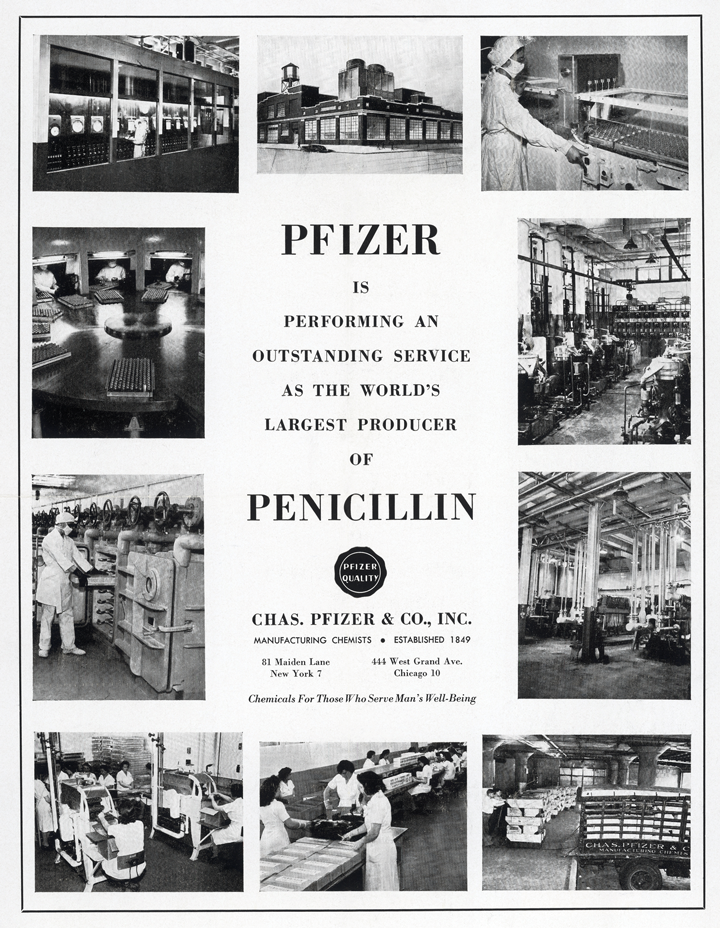
Pfizer’s Motivational Poster (Flavell-While, 2010)
Kane’s innovations laid the foundation for mass-producing penicillin in World War II. They also established a standard practice for deep-tank fermentation in chemical and pharmaceutical production for decades to come. The success of the innovations by Kane and his colleagues was not limited to a single company or product, but became part of a broader, collaborative industrial effort during World War II. Kane’s scalable, controlled deep-tank fermentation process was not only used to produce penicillin at Pfizer Inc. but also shared among many pharmaceutical companies, including Pfizer’s competitors.
Pfizer Inc. became the largest penicillin producer in World War II. The international penicillin program was one of the largest wartime initiatives and among the most significant scientific and technological achievements during World War II. In a matter of five years, penicillin went from low-yielding, labor-intensive surface fermentation in 1940 to mass production in 10,000-gallon tanks in 1945 (Short, 2021; Quinn, 2013). Military surgeons experienced the wonder drug of penicillin firsthand. Before the arrival of penicillin, the standard treatment for deep wounds by field hospital surgeons was to first cut away the dead and contaminated tissue, remove dirt, shrapnel, and debris, and then leave wounds open to drain and heal (Conniff, 2017). The recovery process took months, and infections were a leading cause of death among wounded soldiers. There was very little that physicians could do if bacterial infections spread into a wounded soldier’s bloodstream. For soldiers who suffered from cholera or gas gangrene during World War I, doctors had no effective treatment once their infections started spreading. After penicillin was made available on the battlefield, surgeons simply cleaned the wounds, sprinkled penicillin on the wounds, stitched them closed, and then sent soldiers to recover. “The saving of time and the better results obtained by the early healing of such wounds is practically unbelievable,” wrote one surgeon (Conniff, 2017; “Penicillin and the Antibiotic Revolution”, 2020).
Statistics on mortality rate differences before and after the introduction of penicillin highlight its historical impact. The number of lives saved by penicillin is incalculable. One source mentioned that during World War I, the Great War, 12 to 15% of wounded soldiers who were treated in battlefield hospitals died due to infections, with most infections being sepsis and gas gangrene. The mortality rate in subsequent wars was reduced to 3% due to the advent of antibiotics (Short, 2021). This dramatic reduction in mortality shows the extreme effectiveness of these mass-produced antibiotics, highlights the significance of fermentation methods, and directly illustrates the real-world impact of Kane's deep-tank fermentation methods, which made such large-scale treatment possible.
Statistics on mortality from PBS documentation are even more striking: Throughout history, infection has been a major cause of death in war, but the introduction of penicillin dramatically reduced mortality from bacterial pneumonia from about 18% in World War I to less than 1% in World War II (Markel, 2013). This comparison between the mortality rates of World War I and World War II emphasizes how technological advancements in production were essential in achieving these medical outcomes. Terramycin, a broad-spectrum antibiotic, is extremely effective against more than 100 different infectious organisms (“Zoetis History”, 2015). The effectiveness and the production methods of Terramycin illustrate the continued impact and versatility of fermentation-based antibiotic production, reinforcing Kane’s lasting influence on modern medicine. These outcomes further support the argument that medical breakthroughs depend not only on discovery, but on the systems that enable their mass production.
The video, Penicillin: The Wonder Drug of WWII, was produced by @FrontlineMedicsOfficial and published on YouTube. It presents statistical evidence demonstrating the life-saving impact of penicillin during World War II.
The impact of penicillin did not stop on the battlefield. During World War II, scarce penicillin was initially restricted to military use. However, when World War II ended, a massive supply of penicillin was available to civilian populations. The widespread availability of penicillin dramatically reduced deaths from bacterial infections that previously were major causes of mortality. Penicillin proved to be highly effective against diseases such as pneumonia, septicemia, rheumatic fever, and syphilis, leading to rapidly declining mortality rates and shorter recovery times for millions of patients. Public health data show that death rates from infectious diseases fell drastically in the late 1940s and 1950s, reflecting antibiotics’ growing impact on civilian populations (“Achievements in Public Health, 1900-1999: Control of Infectious Diseases”).
Silence on Innovators
Jasper Kane’s significant deep-tank fermentation contributions, which enabled the mass production of penicillin, did not receive an adequate level of recognition. This lack of recognition has been acknowledged in David Wilson’s book In Search of Penicillin, “It is the biggest single failing of the myth about penicillin that it ignores the technological breakthrough of deep fermentation, a breakthrough that was every bit as vital to the successful development of penicillin as any of the more dramatic laboratory work” (Flavell-While, 2010). Furthermore, Pfizer’s contributions to penicillin production are also sometimes only casually mentioned in popular media. However, the statistics showing that 90% of the penicillin carried by Allied forces on Normandy Beach was produced by Pfizer, and that 85% of the penicillin supplied to the civilian population after the war was also produced by Pfizer, are indisputable facts that highlight the contributions of Jasper Kane and Pfizer to penicillin production during World War II (“Pfizer Today: Bringing Science to Life”).
Although Jasper Kane is recognized as one of the “Giants of Poly”, there is no dedicated Poly Archives collection set aside for him. Research within the Poly Archives instead points to references to his work in Pfizer archives hosted at the Center for Brooklyn History. Additional details can also be found on the Pfizer History website, which includes references to Jasper Kane. Fortunately, a campus dining hall, the Jasper Kane Café, is named in his honor, allowing us to remember and celebrate his achievements.
Penicillin Supply Information (Pfizer Today)
This booklet is in a Pfizer archives collection at the Center for Brooklyn History. It shows statistics of penicillin production by Pfizer after the war. Specifically, it indicates that 85% of the penicillin supply to the civilian population after World War II was produced by Pfizer. This statistic highlights the scale of Pfizer’s production and further demonstrates the importance of deep-tank fermentation methods that enable large-scale production of antibiotics.
Kane’s Legacy Continues
Mass production of penicillin saved countless lives worldwide and marked the beginning of the modern antibiotic era. For many decades, deep-tank fermentation methods engineered by Dr. Kane have been used to produce antibiotics such as penicillin and Terramycin at Pfizer (American Chemical Society). Fermentation has remained a major chemical production process with carefully controlled physicochemical parameters that continue to improve production today (Haque, 2024). Today, all natural penicillin drugs are produced by deep-tank fermentation, and many variations of the family of penicillin medications are based on a core structure of 6-APA, which is also produced by deep-tank fermentation (Haque, 2024). This continuity demonstrates that Kane’s work was not merely a wartime solution, but a foundational transformation in the chemical and pharmaceutical industries that continues to shape modern society.
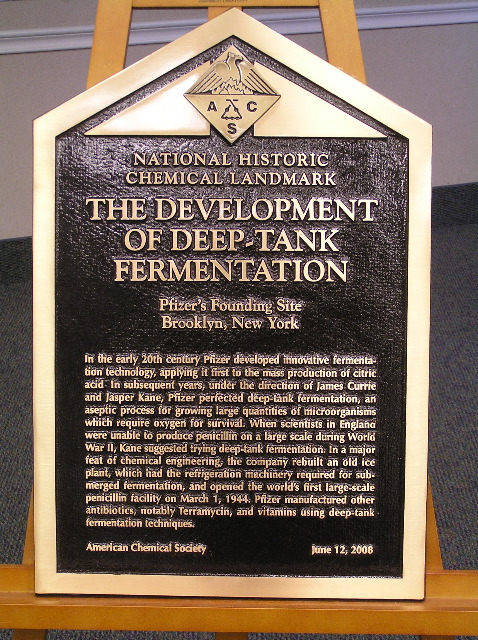
Dr. Kane credited his success in developing this fermentation method to the Polytechnic Institute of Brooklyn. He said, “Polytechnic provided me with a very useful education. It gave me the discipline of a scientist and the courage to explore.” His legacy lives on. Through the deep-tank fermentation method, his $2 million donation to Polytechnic University (Rodengen, 2005), and the Jasper Kane Café, where students gather to study and collaborate, his impact continues to shape both scientific innovation and the academic community he helped support. Dr. Henry A. McKinnell Jr. said it best in his 2004 commencement address, “… Poly Saved the World” (McKinnell, 2004). In recognition of this achievement, the NYU Tandon School of Engineering renamed the café after Jasper Kane, and the American Chemical Society designated Pfizer’s development of deep-tank fermentation as a National Historic Chemical Landmark in a ceremony in Brooklyn on June 12, 2008 (American Chemical Society).

The video, Super Bowl LVIII (58) Commercial: Pfizer – Here’s To Science (2024), was produced in collaboration with Publicis Conseil and LeTruc/Publicis NY. The commercial is designed to celebrate scientific discovery and engineering innovation.
Conclusion
The deep-tank fermentation technology pioneered by Jasper H. Kane fundamentally transformed the chemical and pharmaceutical industries. It remains a core production method in the pharmaceutical and biotechnology industries. Today, modern bioreactors, as direct descendants of Kane’s system, are enhanced with advanced sensors, automation, and sterile engineering, and are used to produce many drugs, including antibiotics, insulin, monoclonal antibodies, vaccines, and recombinant proteins. The same methods are also used to produce organic acids, vitamins, and enzymes, as Dr. Kane discussed on the CBS Radio Network program Adventures in Science, “Chemical progress” (Smithsonian Institution, Box 400 of 459, Folder 41, Record Unit 7091, 1954). In fact, this technology has been in continuous use from World War II to the present. Taken together, this enduring legacy demonstrates that the critical transformation of penicillin lay not simply in its discovery, but in the development of scalable industrial processes that made it widely available, highlighting the central role of engineering innovation in shaping modern medicine.
Works Cited
Primary Sources
The Chemical Engineer, “Image of Jasper Kane,” Poly Archives, accessed April 8, 2026, https://polyarchives.hosting.nyu.edu/items/show/185.
Polytechnic University (2004) Giants of Poly: Jasper H. Kane. Ready Reference Collection: RG.040 (Drawer 2, Folder 77), Poly Archives, Bern Dibner Library, Brooklyn, NY, https://polyarchives.hosting.nyu.edu/items/show/57. Accessed 31 Mar. 2026.
Charles Pfizer & Co. Inc., Penicillin bottle, 1944, M1990.13; Brooklyn Historical Society.
333 Jay Street, Before Polytechnic: 1950-1957, https://findingaids.library.nyu.edu/poly/poly_rg_026/images/rn8pk7gd/. Accessed 7 Apr. 2026.
“History.” Pfizer, www.pfizer.com/about/history. Accessed 29 Mar. 2026.
Sir Howard Florey – Facts. NobelPrize.org. Nobel Prize Outreach 2026. Sun. 29 Mar 2026., https://www.nobelprize.org/prizes/medicine/1945/florey/facts/
“Howard Walter Florey and Ernst Boris Chain.” Science History Institute, 24 Feb. 2026, www.sciencehistory.org/education/scientific-biographies/howard-walter-florey-and-ernst-boris-chain/.
Sullivan, Bill, Professor of Pharmacology & Toxicology. “Guns, Not Roses – Here’s the True Story of Penicillin’s First Patient.” The Conversation, 11 Mar. 2022, theconversation.com/guns-not-roses-heres-the-true-story-of-penicillins-first-patient-178463.
“Penicillin Production in WW II.” Upjohn, www.upjohn.net/other/warwork/penicillin/penicillin.htm. Accessed 29 Mar. 2026.
“How a Ceramic Object Fueled a Medical Breakthrough.” National Museums Scotland, www.nms.ac.uk/discover-catalogue/how-a-ceramic-object-fueled-a-medical-breakthrough. Accessed 29 Mar. 2026.
Kane, Jasper H., inventor, Finlay, Alexander, inventor, and Amann, Philip F., inventor. Production of Fumaric Acid. 17 Aug. 1943. U.S. Patent 2,327,191. Google Patents, https://patents.google.com/patent/US2327191A. Accessed 30 Mar. 2026.
Kane, Jasper H., inventor, Finlay, Alexander C., inventor, and Amann, Philip F., inventor. Production of Itaconic Acid. 18 Sep. 1945. U.S. Patent 2,385,283. Google Patents, https://patents.google.com/patent/US2385283A. Accessed 30 Mar. 2026.
Currie, James N., inventor, Kane, Jasper H., inventor, and Finlay, Alexander, inventor. Process for Producing Gluconic Acid by Fungi. 10 Jan. 1933. U.S. Patent 1,893,819. Google Patents, https://patents.google.com/patent/US1893819A. Accessed 30 Mar. 2026.
Sobin, Ben A., inventor, Finlay, Alexander C., inventor, and Kane, Jasper H., inventor. Terramycin and Its Production. 18 Jul. 1950. U.S. Patent 2,516,080. Google Patents, https://patents.google.com/patent/US2516080A. Accessed 30 Mar. 2026.
Davisson, Jacob W., inventor, Tanner, Fred W., inventor, Finlay, Alexander C., inventor, and Kane, Jasper H., inventor. Rimocidin and Methods for Its Recovery. 6 Dec. 1960. U.S. Patent 2,963,401. Google Patents, https://patents.google.com/patent/US2963401A. Accessed 30 Mar. 2026.
English, Arthur R., inventor, and Kane, Jasper H., inventor. Antibiotic Compositions Containing Oxytetracycline and Polymyxin. 19 Nov. 1957. U.S. Patent 2,813,820. Google Patents, https://patents.google.com/patent/US2813820A. Accessed 30 Mar. 2026.
Poly Collection, ARC.084, Pfizer Today: Bringing Science to Life
Pfizer. (1986) Pfizer Today: Bringing Science to Life. ARC.084: Poly Collection (Box 1, Series 1, Folder 1), Center for Brooklyn History, Brooklyn, NY.
Flavell-While, Claudia. “Pfizer’s Penicillin Pioneers – Jasper Kane and John McKeen.” The Chemical Engineer, Feb. 2010, www.thechemicalengineer.com/features/cewctw-pfizers-penicillin-pioneers-jasper-kane-and-john-mckeen.
Jasper H. Kane; “Chemical progress.” CBS Radio Network. Record Unit 7091 – Science Service Records. Box 400 of 459. Folder 41 Broadcast February 22, 1954. Smithsonian Institution.
“Pharmacy Unit Is 25 Years Old” The Tablet, 1 May 1954, p. 20.
Secondary Sources
Conniff, Richard. “Penicillin: Wonder Drug of World War II.” HistoryNet, 3 July 2017, historynet.com/penicillin-wonder-drug-world-war-ii/.
Roueché, Berton. “Something Extraordinary.” The New Yorker, 21 July 1951, www.newyorker.com/magazine/1951/07/28/something-extraordinary.
Zoetis History, www.zoetis.com/global-assets/private/zoetis_history_timeline_march-9-2015.pdf. Accessed 29 Mar. 2026.
“Alexander Fleming.” Famous Scientists. famousscientists.org. 09 Jul. 2015. Web. 3/29/2026, www.famousscientists.org/alexander-fleming/.
Blake, K. “The Penicillin Myth.” Asimov Press (2025)., https://doi.org/10.62211/04kq-22ub
“Team Penicillin.” Back From The Dead, Oxford University, www.mhs.ox.ac.uk/backfromthedead/exhibition/team-penicillin/index.html. Accessed 29 Mar. 2026.
Zaccaro, David Lumb & Maria. “Family to Tell First Penicillin Patient’s Story at Conference.” BBC News, BBC, 3 July 2023, www.bbc.com/news/uk-england-berkshire-66068886.
Bruggink, Alle. “Chemistry vs. Bacteria, # 23. Credit Where Credit’s Due?” Bio Based Press, 12 July 2021, www.biobasedpress.eu/2021/07/chemistry-vs-bacteria-23-credit-where-credits-due-industrial-production/.
Short, B. “Antibacterial Warfare: The Production of Natural Penicillin and the Search for Synthetic Penicillin during the Second World War.” JMVH, July 2021, jmvh.org/article/antibacterial-warfare-the-production-of-natural-penicillin-and-the-search-for-synthetic-penicillin-during-the-second-world-war/.
Culture vessel, 1940, designed by Dr Norman George Heatley (1911-2004). Museum reference T.1989.101.
Wood, Jonathan. “Penicillin: The Oxford Story.” University of Oxford, 16 July 2010, www.ox.ac.uk/news/science-blog/penicillin-oxford-story.
“The Forgotten Mother of Penicillin .” Science History Institute, 21 Nov. 2025, www.sciencehistory.org/stories/disappearing-pod/the-forgotten-mother-of-penicillin/.
Digitalized Archives. “NOVA: The Rise of a Wonder Drug (1986) 💊🔬 | How Penicillin Changed the World.” YouTube, YouTube, 20 July 2025, www.youtube.com/watch?v=P0URg0YGxXM.
Markel, Howard. “The Real Story behind Penicillin.” PBS, Public Broadcasting Service, 27 Sept. 2013, www.pbs.org/newshour/health/the-real-story-behind-the-worlds-first-antibiotic.
“Achievements in Public Health, 1900-1999: Control of Infectious Diseases.” Centers for Disease Control and Prevention, Centers for Disease Control and Prevention, www.cdc.gov/mmwr/preview/mmwrhtml/mm4829a1.ht. Accessed 8 Apr. 2026.
Flavell-While, Claudia. “Pfizer’s Penicillin Pioneers – Jasper Kane and John McKeen.” The Chemical Engineer, Feb. 2010, www.thechemicalengineer.com/features/cewctw-pfizers-penicillin-pioneers-jasper-kane-and-john-mckeen.
American Chemical Society. “Pfizer’s Work on Penicillin for World War II Becomes a National Historic Chemical Landmark.” EurekAlert!, 12 June 2008, www.eurekalert.org/news-releases/491868.
Quinn, Roswell. “Rethinking Antibiotic Research and Development: World War II and the Penicillin Collaborative.” American Journal of Public Health, U.S. National Library of Medicine, Mar. 2013, pmc.ncbi.nlm.nih.gov/articles/PMC3673487/.
Case Study #18 Penicillin and the Antibiotic Revolution, Aug. 2020, globalcapitalism.history.ox.ac.uk/files/case18penicillinv2pdf.
Haque, Md Afril, et al. “Harnessing Biotechnology for Penicillin Production: Opportunities and Environmental Considerations.” Science of The Total Environment, vol. 946, 10 Oct. 2024, art. 174236, www.sciencedirect.com/science/article/pii/S0048969724043845.
Rodengen, Jeffrey L., and Mickey Murphy. Changing the World: Polytechnic University - - the First 150 Years. Write Stuff Enterprises, Inc, 2005.
McKinnell, Henry. “‘How Poly Saved the World.’” Poly Archives, 27 May 2004, polyarchives.hosting.nyu.edu/.
NYU Dining, “Jasper Kane Cafe,” Poly Archives, accessed April 8, 2026, https://polyarchives.hosting.nyu.edu/items/show/285.
“Designation of Deep-Tank Fermentation at Pfizer’s Brooklyn Laboratory as a National Historic Chemical Landmark.” ACS New York Section, 2008, www.newyorkacs.org/reports/NYACSReport2008/pfizerlandmark.html.
“Pfizer Inc. (PFE) Valuation Measures & Financial Statistics.” Yahoo Finance, finance.yahoo.com/quote/PFE/key-statistics/. Accessed 26 Apr. 2026.
“Penicillin Production through Deep-Tank Fermentation.” American Chemical Society, www.acs.org/education/whatischemistry/landmarks/penicillin.html. Accessed 25 Apr. 2026.
Medical History. “The Mass Production of Penicillin for WW2.” YouTube, YouTube, 28 Mar. 2024, www.youtube.com/watch?v=g2uLeSvOCCY.
Since 1939. “The Drug That Couldn”t Save One Man in 1941 - Then Saved Millions in World War II." YouTube, YouTube, https://www.youtube.com/watch?v=elnXp5iJYlo.
@FrontlineMedicsOfficial. “Penicillin: The Wonder Drug of WWII.” YouTube, YouTube, www.youtube.com/shorts/5hrKcMhatFY. Accessed 8 Apr. 2026.
Superbowl Commercials. “Super Bowl LVIII (58) Commercial: Pfizer - Here's To Science (2024).” YouTube, YouTube, 16 Feb. 2024, www.youtube.com/watch?v=xiadPtcevQI.